
More than thirty islands and cays strung between St. Vincent and Grenada, split between two nations, with a new bay every few hours. In the trades you sail on a beam reach, and by evening the anchor sits in sand that still glows pale under four metres of water. This guide covers where to drop the hook, when to go and how clearance works between two countries.
The Grenadines at a glance
The Grenadines run for about 70 km south of volcanic St. Vincent, almost down to Grenada. The chain is divided: Bequia, Mustique, Canouan, Mayreau, the Tobago Cays, Union Island and Petit St. Vincent belong to St. Vincent and the Grenadines. Carriacou and Petite Martinique belong to Grenada. Crossing between Union Island and Carriacou means clearing out and back in – more on that below.
Passages are short. Carriacou to Union Island is about 10 nautical miles, Union to the Tobago Cays around 5. The longest leg of a typical week is the run from Grenada up to Carriacou, just under 30 miles.
Best time to sail and wind
High season is December to April: dry, steady easterly trades, air 26–30 °C, water 26–28 °C. The trade wind usually blows 15 to 25 knots. In the channels between islands it kicks up a short, steep sea, and squalls arrive fast and hard – reef an hour early rather than a minute late. Sailing stays pleasant until the end of July; August and September are wetter and carry the highest hurricane risk. The official Atlantic hurricane season runs from 1 June to 30 November.
Our recommendation: for quiet anchorages, aim for January to March outside the holidays. To see Carriacou at its liveliest, come in early August for the Carriacou Regatta, raced in traditional wooden sloops.
Charter bases and getting there
- Grenada (St. George's, Port Louis Marina): international airport, large fleets, the natural start for a northbound route through Carriacou, Union and the Tobago Cays.
- St. Vincent and Bequia: closer to the northern Grenadines; Bequia's Admiralty Bay is both a base and one of the finest anchorages in the chain.
- St. Lucia or Martinique: for longer or one-way routes. St. Lucia to St. Vincent is about 50 miles, Martinique to St. Vincent about 90 – open Atlantic passages for an experienced crew.
Tell us your dates and we'll find out which yacht is free at which base – monohull or catamaran, bareboat or skippered.
Clearing in between St. Vincent and Grenada
Each time you enter a new country the skipper needs every crew member's passport (valid for at least six months), the boat's papers, the yellow Q flag and the host country's courtesy flag.
- Ports of entry, St. Vincent and the Grenadines: Kingstown and Wallilabou (St. Vincent), Port Elizabeth in Admiralty Bay (Bequia), Clifton (Union Island). On Canouan, clearance is at the airport.
- Ports of entry, Grenada: Hillsborough (the only one on Carriacou) and St. George's (Grenada).
- In practice: clearance in Clifton often takes about 20 minutes and is paid in cash. On Bequia, overtime fees apply after 4 pm and at weekends. Pre-register through SailClear.
Clear out of Grenada before sailing to Union Island – and vice versa. If you cleared in at Hillsborough, there's no need to visit customs again on Grenada.
The islands, north to south
St. Vincent – Wallilabou Bay
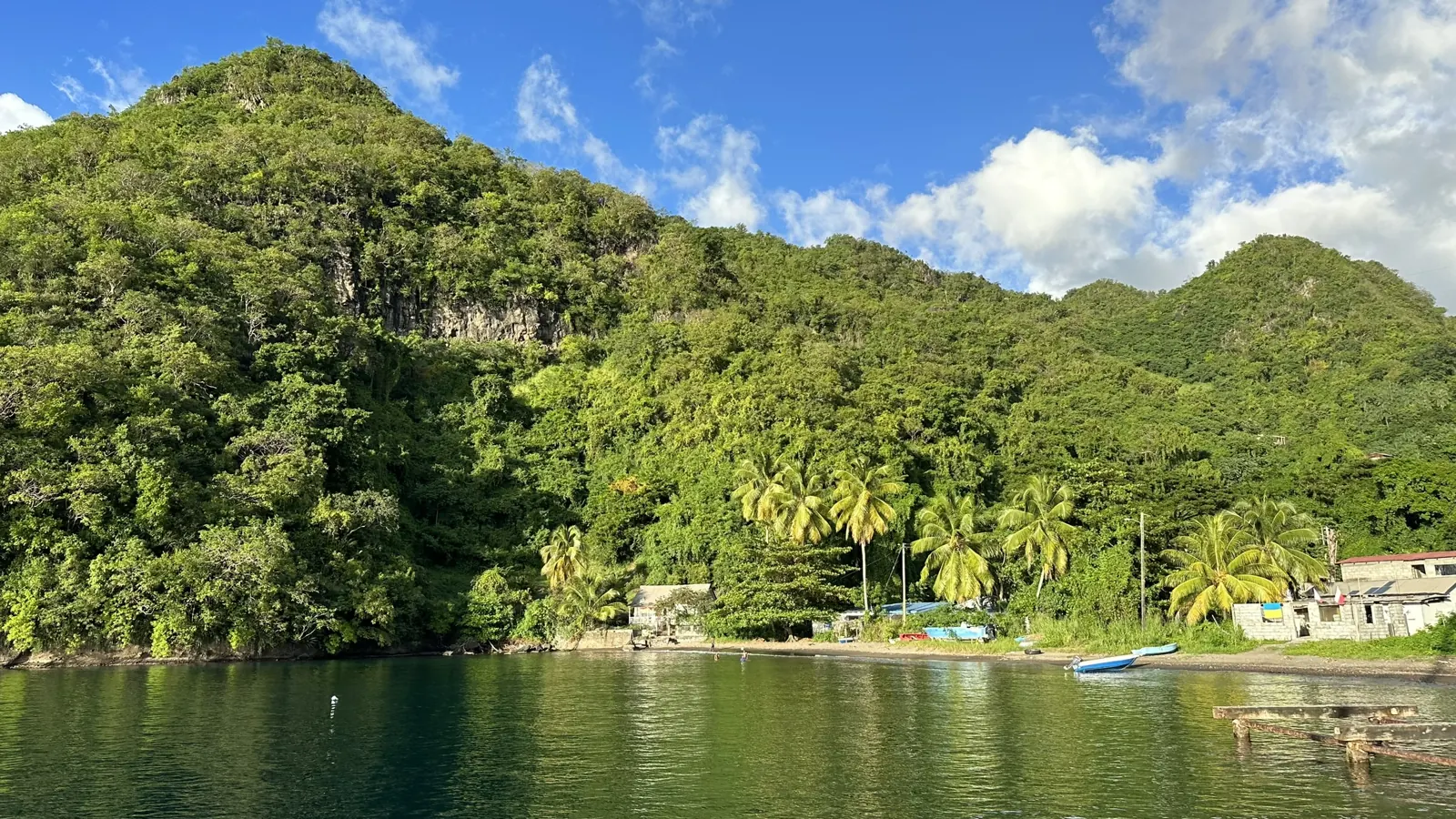
Steep green slopes, black sand and the jetty where parts of "Pirates of the Caribbean" were filmed. The sets and the rock arch at the entrance are still there. Wallilabou is also a port of entry – handy if you're coming down from St. Lucia.
Bequia – Admiralty Bay
Admiralty Bay stays calm even in a strong trade wind, the sand holds well, and the Port Elizabeth waterfront has plenty of dinghy docks. Look in on the model-boat builders and, if there's time, the Old Hegg Turtle Sanctuary. At sunset, everyone gathers at the Frangipani bar.
Mustique and Canouan
Mustique is a private island of villas; for sailors there's Britannia Bay, Basil's Bar and Macaroni Beach. On Canouan, Charlestown Bay has good holding but gusts and some swell – leave room to swing.
Mayreau – Salt Whistle Bay
A sheltered crescent of sand and palms, and popular with sailors for exactly that reason. Arrive early; the bay is small.
Tobago Cays Marine Park
Five uninhabited cays behind Horseshoe Reef, water in every shade of turquoise, green turtles beside the boat. The park charges a fee, there are moorings, and you anchor on sand north and south of Baradal – never on coral or seagrass. Depending on wind and tide it can get rolly, and there are no dinghy docks. Go slowly in the dinghy where people are snorkelling.
Union Island – Clifton and Chatham Bay
Clifton is where you clear in or out. Chatham Bay on the west coast has sand in 4–7 metres and good holding, but gusts come down off the hills – put out plenty of chain and keep your distance.
Carriacou – Tyrrel Bay, Sandy Island, Paradise Beach
Carriacou – "land of reefs" in the Kalinago language – has about 8,000 people and not a single traffic light. In Windward, boatbuilders still shape wooden sloops by hand. Tyrrel Bay is the main anchorage: good holding on clean sand, poor in weed. Divers and sailors meet for pizza at the Lazy Turtle. Off Paradise Beach in L'Esterre lies Sandy Island, a palm-dotted sandbar in a marine park.
Our recommendation: on Carriacou, Paradise Beach Club is a favourite of ours – grilled fish, feet in the sand, a view of Sandy Island.
Petite Martinique
About 900 people, no airstrip, hardly any tourism. The bottom is soft mud – let the anchor settle before you load it. Bring Eastern Caribbean dollars in cash; almost everything closes on Sundays. On the way, stop for a swim at the Mopion sandbar – it shoals quickly, so approach from the west.
Sample route: 7 days from Grenada
| Day | Leg | Distance |
|---|---|---|
| 1 | St. George's → Dragon Bay (Molinere underwater sculptures) | approx. 3 nm |
| 2 | Dragon Bay → Carriacou (clear in at Hillsborough, Tyrrel Bay) | approx. 28 nm |
| 3 | Carriacou → Union Island (Clifton, clear in to SVG) | approx. 10 nm |
| 4 | Union Island → Tobago Cays | approx. 5 nm |
| 5 | Tobago Cays → Petite Martinique (lunch at the Mopion sandbar) | approx. 7 nm |
| 6 | Petite Martinique → Prickly Bay, Grenada | approx. 43 nm |
| 7 | Prickly Bay → St. George's | approx. 8 nm |
About 100 miles in a week – relaxed, with room for an extra day at anchor. With two weeks you can carry on to Mayreau, Canouan and Bequia. Distances are rounded; the skipper sets the final route by weather and crew.
Practical tips on board
- Cash: Eastern Caribbean dollars (EC$) for clearance, park fees and small beach bars.
- Boat boys: in the Tobago Cays and other bays, locals come alongside offering fish, bread or help with a mooring – friendly, sometimes persistent. A clear "no, thank you" is respected.
- Anchoring: look for sand patches, avoid seagrass and coral, give plenty of room in busy bays.
- Squalls: dark cloud to windward often means ten minutes of strong wind and rain – shorten sail in good time.
Frequently asked questions
Do I need a sailing licence for the Grenadines?
For a bareboat charter, operators require a valid skipper's licence and sailing experience. Without one, you book a yacht with a skipper – we're happy to arrange that for you.
When is the best time to sail the Grenadines?
December to April: dry, with steady trade winds of 15–25 knots. August and September carry the highest hurricane risk.
Do I have to clear customs between St. Vincent and Grenada?
Yes. Union Island (Clifton) belongs to St. Vincent and the Grenadines, Carriacou (Hillsborough) to Grenada. You clear out and back in between them.
How many miles do you sail in a week?
A classic 7-day route from Grenada via Carriacou, Union and the Tobago Cays covers about 100 nautical miles.